


Last updated: October 13, 2026
Introduction
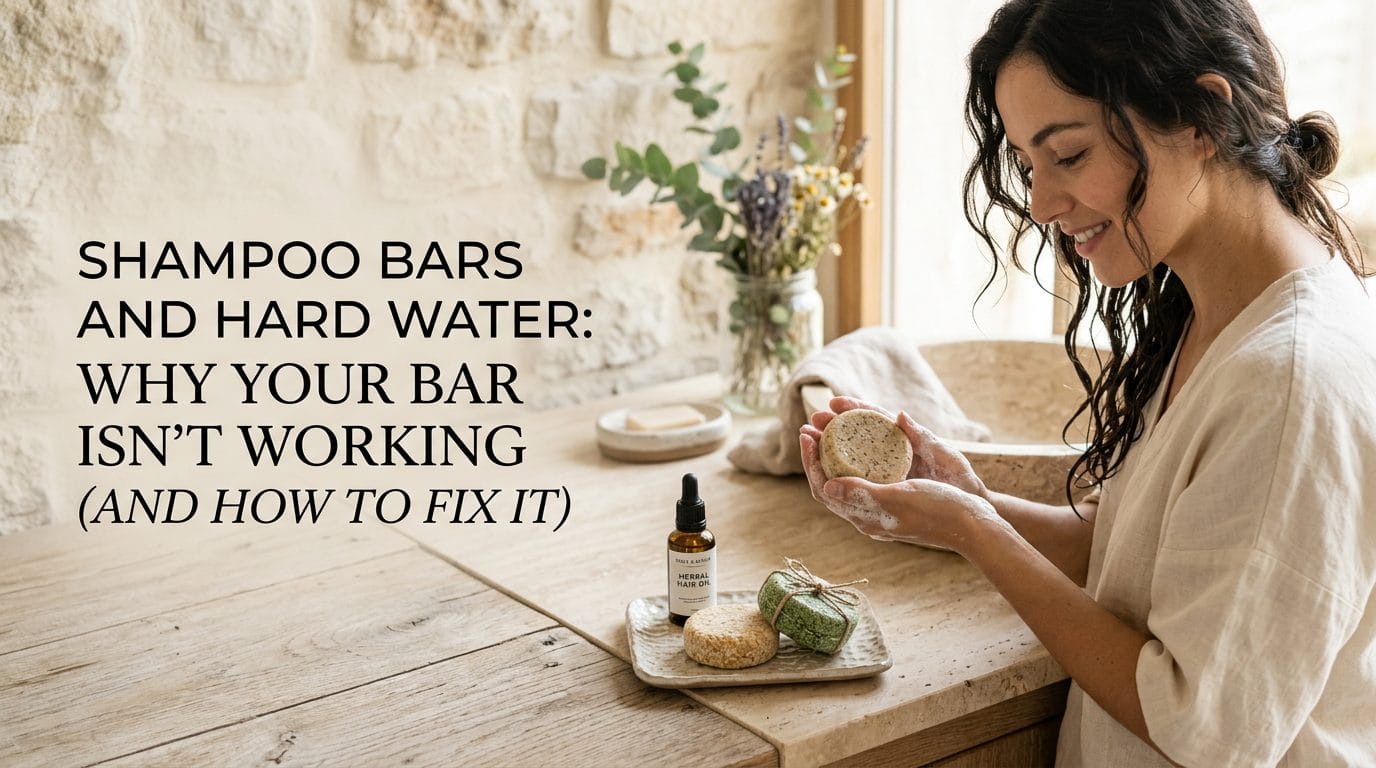
Your shampoo bar experience depends heavily on something you might never think about: your water.
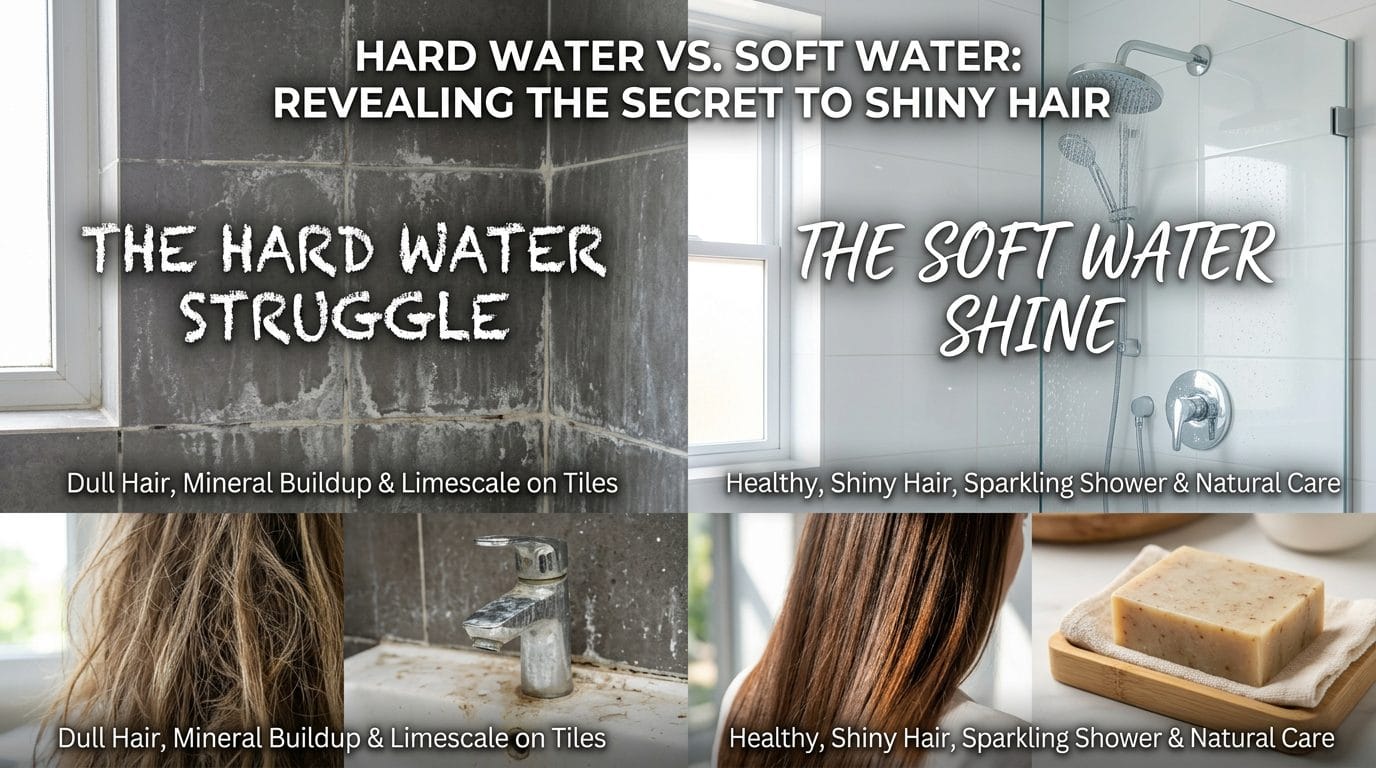
If you’ve switched to shampoo bars and experienced waxy buildup, poor lather, or dull hair, the problem might not be the bar itself—it’s your water hardness. Conversely, if you have soft water, you might find some bars too moisturizing or difficult to rinse.
This guide covers hard water shampoo bars and soft water ones: how water hardness impacts shampoo bar performance, which bars work best for hard vs. soft water, and how to determine your water type.
Quick answer: Hard water (120+ ppm) works well with either cold process soap bars + ACV rinse (the Natural Answer approach) or detergent-based bars with chelating agents. Soft water (<60 ppm) works with most bar types.
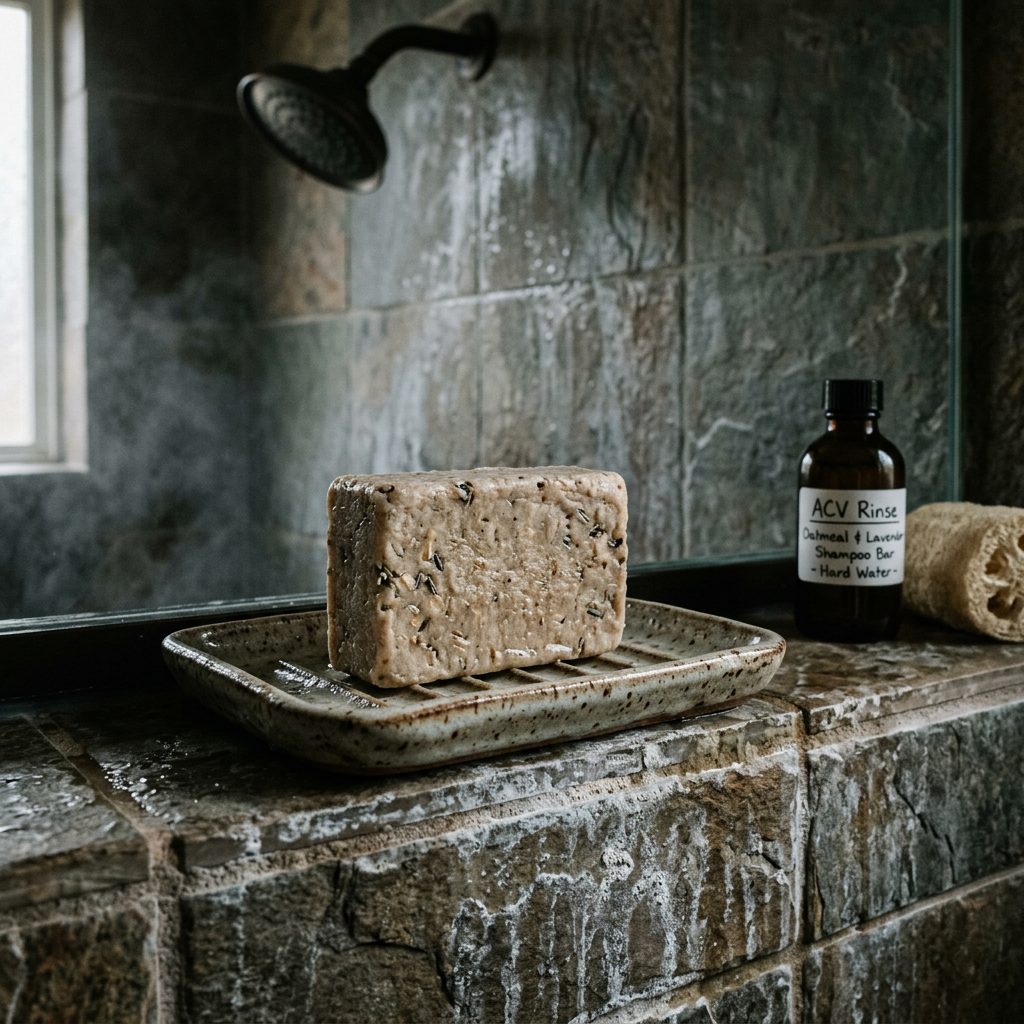
For what it is worth, our own bars are true cold process soap — so in hard water they want that vinegar rinse too. That is the trade for 100% natural ingredients and no synthetic detergents. See the bars →
Understanding Water Hardness
What Is Water Hardness?
Water hardness measures dissolved minerals—primarily calcium and magnesium—in your water supply.
Measurement:
- Parts per million (ppm) or milligrams per liter (mg/L)
- Grains per gallon (gpg) in the US (1 gpg = 17.1 ppm)
Water Hardness Scale:
| Classification | ppm (mg/L) | gpg |
|—|—|—|
| Soft | 0-60 | 0-3.5 |
| Slightly hard | 61-120 | 3.6-7.0 |
| Moderately hard | 121-180 | 7.1-10.5 |
| Hard | 181-250 | 10.6-14.6 |
| Very hard | 250+ | 14.7+ |
How to Check Your Water Hardness
1. Water utility report (free)
- Most municipalities publish annual water quality reports
- Search “[your city] water quality report” or “[your city] water hardness”
- EU countries often list hardness in German degrees (°dH): multiply by 17.8 to get ppm
2. Home test kit (€5-15)
- Aquarium test strips (API, Tetra brands)
- Drop-based titration kits (more accurate)
- Available at pet stores or online
3. Online databases
- EU: Water hardness maps by country
- UK: Water company websites provide postcode lookups
- US: USGS National Water Information System
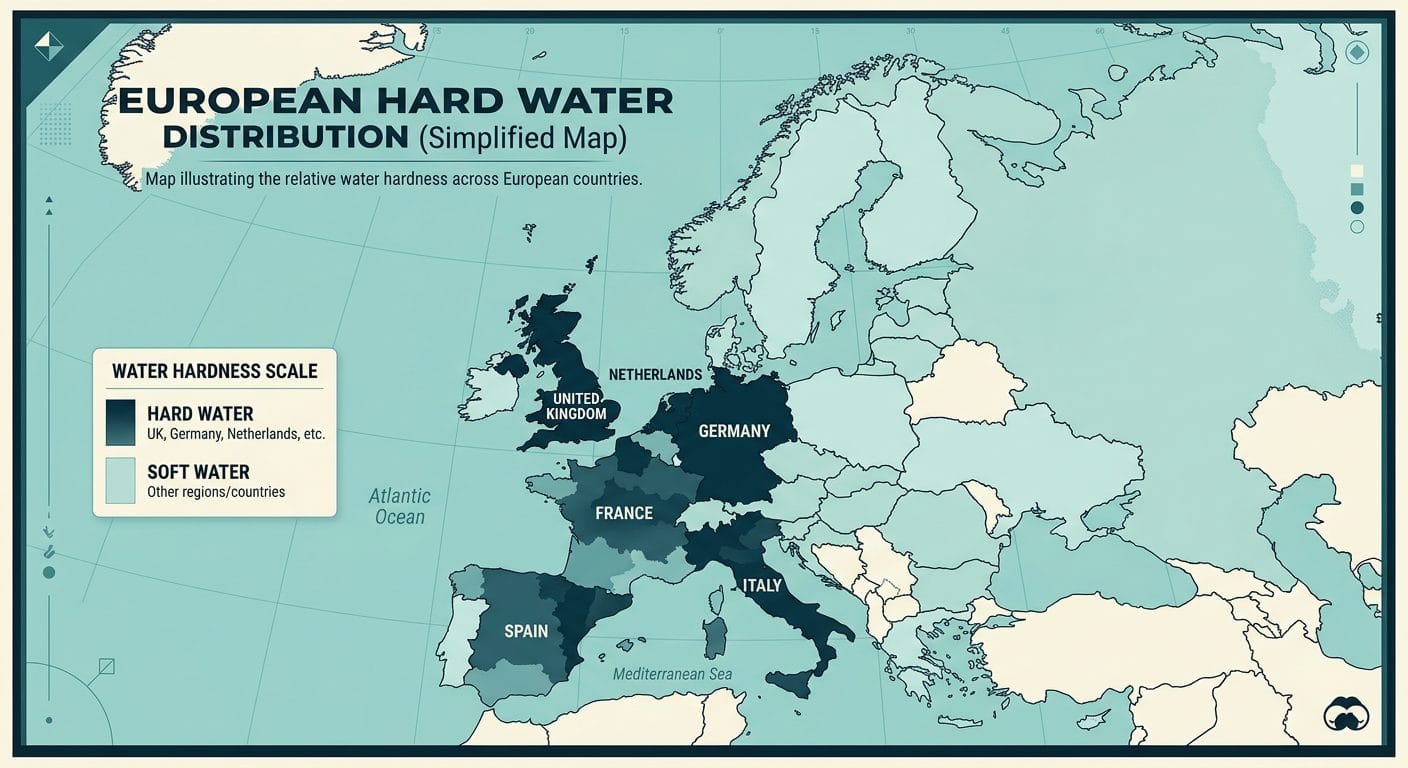
European water hardness examples:
| City | Hardness (ppm) | Classification |
|—|—|—|
| Amsterdam | 130-160 | Moderately hard |
| Brussels | 180-220 | Hard |
| Paris | 200-300 | Hard to very hard |
| Berlin | 140-180 | Moderately hard |
| London | 200-280 | Hard to very hard |
| Rome | 220-350 | Very hard |
| Athens | 180-250 | Hard to very hard |
| Dublin | 80-120 | Slightly to moderately hard |
How Water Hardness Affects Shampoo Bars
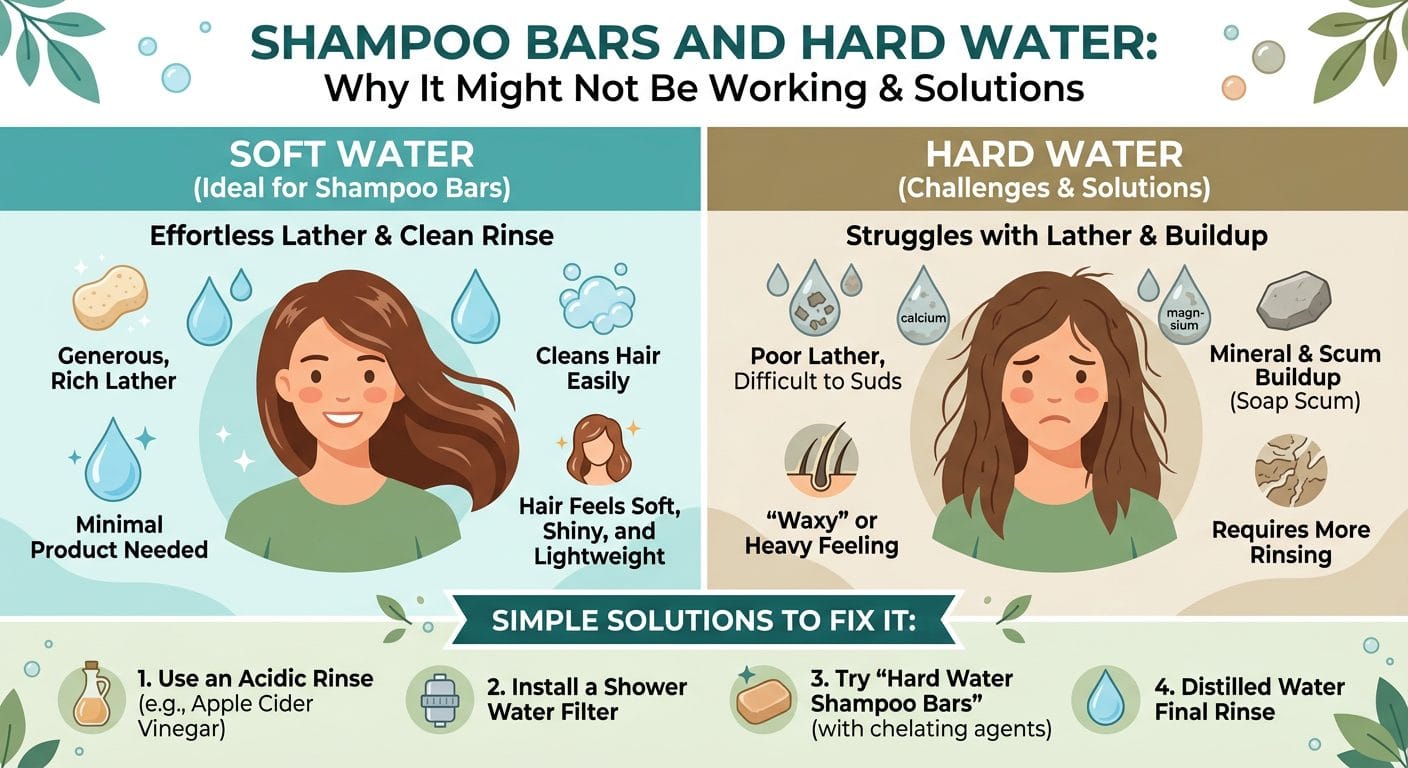
Hard Water + Shampoo Bars: The Problem
When shampoo bars meet hard water, chemistry creates challenges:
1. Soap scum formation
- Traditional soap bars (saponified oils) react with calcium/magnesium
- Forms calcium stearate = waxy, sticky residue that coats hair
- Creates buildup, dullness, greasiness, tangles
2. Reduced lather
- Minerals neutralize surfactants before they can cleanse
- You need MORE product to achieve the same cleansing
- Bars wear out faster in hard water
3. pH imbalance
- Hard water is often alkaline (pH 7.5-8.5)
- Raises hair’s cuticle layer → frizz, damage, porosity issues
- Cold-process soap bars (pH 9–10) are alkaline — always follow with an ACV rinse to neutralise the pH and prevent residue buildup
4. Ingredient inefficiency
- Beneficial oils, proteins, extracts bind to minerals instead of hair
- You lose the conditioning benefits you paid for
Symptoms your water is too hard for your bar:
- ✗ Waxy, greasy, or sticky residue after washing
- ✗ Hair feels coated, heavy, or limp
- ✗ Dull, lackluster appearance
- ✗ Difficult to rinse cleanly
- ✗ Tangles and knots increase
- ✗ Color fades faster (if color-treated)
- ✗ Bar produces minimal lather
- ✗ Takes multiple washes to feel clean
Soft Water + Shampoo Bars: Different Challenges
Soft water (<60 ppm) creates the opposite problem:
1. Over-conditioning
- Without minerals to neutralize surfactants, bars are VERY effective
- Easy to over-moisturize, leading to limp, greasy hair
- Especially problematic for fine or oily hair types
2. Difficulty rinsing
- Soft water creates abundant, long-lasting lather
- Can feel “slippery” and difficult to rinse completely
- Risk of residue buildup from over-application
3. Faster product depletion
- Because bars lather so easily, you might use too much
- Bars can wear down faster despite needing less product
Symptoms your water is too soft for your bar:
- ✗ Hair feels slippery, slimy, or over-conditioned
- ✗ Limp, flat, or greasy-looking hair
- ✗ Excessive lather that won’t rinse away
- ✗ Scalp feels oily within hours of washing
- ✗ Fine hair looks weighed down
Best Shampoo Bars for Hard Water
If you have moderately hard to very hard water (120+ ppm), choose bars specifically formulated to combat mineral buildup.
1. Detergent-based Bars with Chelating Agents
What are detergent bars?
- Synthetic detergent bars (not soap)
- pH 5.5-6.5 (syndet bars); cold-process soap bars (pH 9–10) work in hard water with an ACV rinse
- Contain chelating agents that bind to minerals
Key ingredients to look for:
- EDTA (Ethylenediaminetetraacetic acid)
- Citric acid (natural chelator + pH adjuster)
- Sodium citrate
- SCI (Sodium Cocoyl Isethionate) base
Why they work in hard water:
- Don’t react with minerals to form soap scum
- Chelating agents “trap” calcium/magnesium before they can bind to hair
- Rinse cleanly even in very hard water
- Maintain acidic pH to smooth cuticles
Recommended brands:
- Ethique (most formulas are detergent-based)
- HiBAR (detergent bars, widely available)
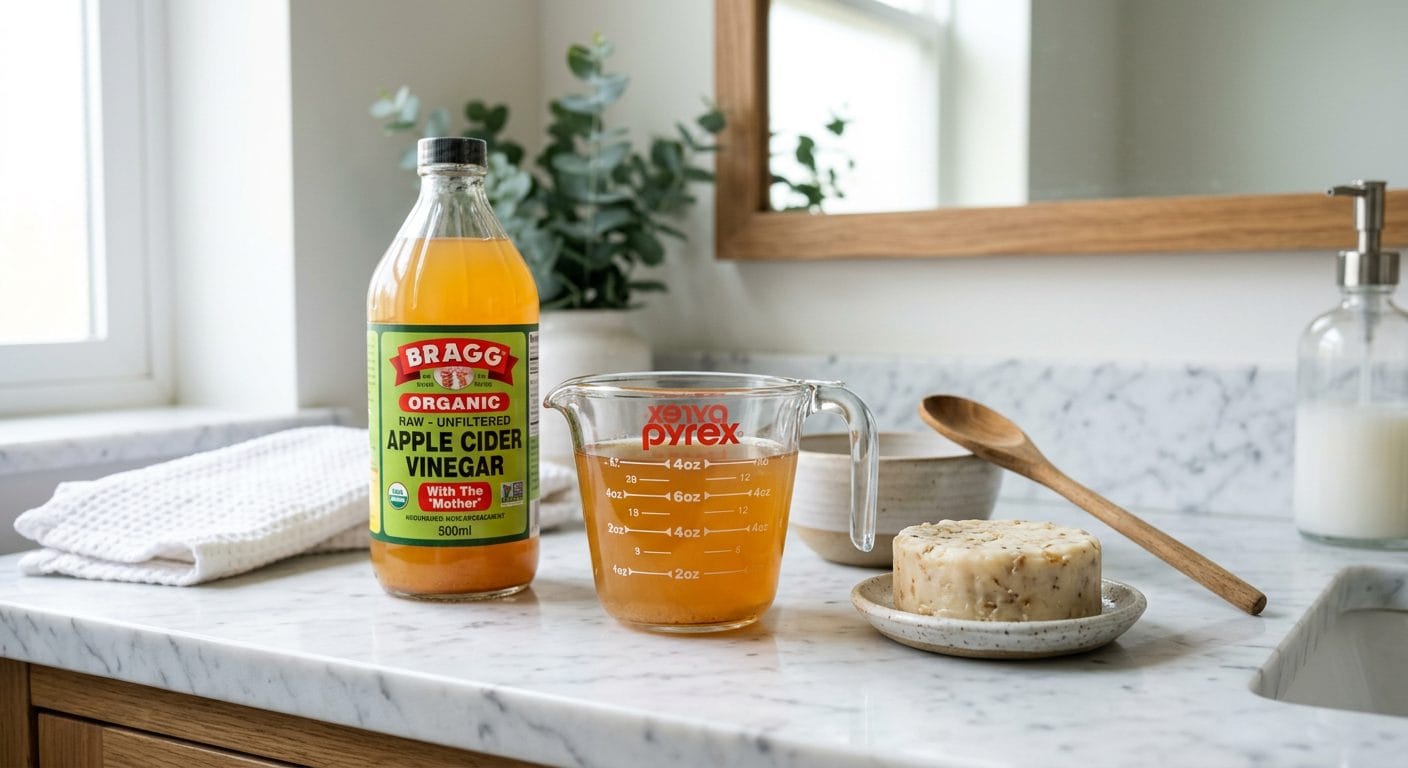
2. Apple Cider Vinegar Rinse (Essential Companion)
Even the best hard water bars benefit from an ACV rinse:
Why it works:
- Acidic pH (2.5-3) dissolves mineral deposits
- Restores hair’s natural pH after alkaline water exposure
- Adds shine, smoothness, reduces frizz
How to use:
- 1. Mix 1-2 tablespoons ACV + 1 cup water
- 2. After shampooing, pour over hair
- 3. Focus on lengths and ends (avoid scalp if sensitive)
- 4. Rinse with cool water
- 5. Use 1-2x per week (not every wash)
Product recommendation:
- Organic, unfiltered ACV with “the mother” (Bragg, Willy’s)
- Pre-diluted rinses (expensive, not necessary)
3. Clarifying Bars (Weekly Treatment)
In very hard water (220+ ppm), use a clarifying bar weekly to reset:
Ingredients to look for:
- Activated charcoal (absorbs buildup)
- Clay (bentonite, kaolin) (draws out impurities)
- Tea tree oil (deep cleansing)
Usage:
- Replace regular bar 1x per week
- Follow with deep conditioning treatment
- Don’t overuse (can strip natural oils)
4. Avoid in Hard Water
❌ Traditional soap-based bars used without a rinse
- Made from saponified oils (olive, coconut, castor)
- Labeled as “cold process,” “handmade soap,” or list “sodium olivate”
- WILL create soap scum in hard water (120+ ppm) — unless followed by an ACV rinse, which dissolves the mineral film (see the Natural Answer section below)
- Skip the ACV rinse and stick to soft-to-slightly-hard water instead
❌ Heavily oil-based bars
- Formulas with shea butter, cocoa butter, argan oil as primary ingredients
- Oils combine with minerals = greasy residue
❌ Bars without chelating agents
- If ingredients list doesn’t mention citric acid, EDTA, or sodium citrate
- Likely to underperform in hard water
5. Dosing: Less Bar, More Water
A common mistake in hard water is over-rubbing the bar to chase a big lather — that just deposits more soap than the water can rinse away. Instead:
- Wet hair thoroughly — scalp soaked, not damp.
- Rub the bar between your hands a few times to build a small amount of lather.
- Massage that lather into the scalp only, rather than rubbing the bar directly on your head.
- Let the suds run through the lengths as you rinse.
One pass is usually enough on day-two hair; heavy product days may need a second.
Best Shampoo Bars for Soft Water
If you have soft to slightly hard water (<120 ppm), you have more flexibility—but can still make poor choices.
1. Traditional Soap-Based Bars (Good Option)
Why they work in soft water:
- No minerals to react with = no soap scum
- Gentle, moisturizing, budget-friendly
- Natural ingredients appeal to eco-conscious buyers
Ingredients to look for:
- Saponified oils: sodium olivate (olive oil), sodium cocoate (coconut oil)
- Cold process or hot process soap
- Simple, short ingredient lists
Best for:
- Normal to dry hair
- Those seeking ultra-natural, minimal formulas
- Budget buyers (often €4-8)
Limitations:
- Alkaline pH (9-10) can roughen cuticles over time
- Less effective cleansing for very oily hair/scalps
- Not ideal for color-treated or chemically processed hair
2. Lightweight Detergent-based Bars
Why they work in soft water:
- Balanced surfactant levels prevent over-conditioning
- pH-balanced formulas protect hair health
- Rinse cleanly without residue
Best for:
- Fine, thin, or oily hair (prone to over-moisturizing)
- Color-treated hair (pH protection)
- Daily washers
Recommended brands:
- Ethique Clarifying bars
- unwrapped life bars
3. Protein-Enriched Bars
Soft water lacks the “gripping” effect of minerals, so protein helps:
Ingredients to look for:
- Hydrolyzed wheat protein
- Keratin
- Silk amino acids
Benefits:
- Adds volume and body to fine hair
- Strengthens without heavy oils
- Balances soft water’s slippery feel
4. Avoid in Soft Water
❌ Ultra-moisturizing bars
- Heavy on shea butter, cocoa butter, argan oil
- Marketed for “dry hair” or “intense moisture”
- Will over-condition in soft water → greasy, limp results
❌ Over-application
- Soft water lathers easily—you need LESS product
- Start with 3-5 swipes, add more only if needed
- Excess product = buildup even in soft water
Transitioning Between Water Types
Moving from Hard to Soft Water
Example: Relocating from London (hard) to Dublin (soft)
Adjustment period: 2-4 weeks
Steps:
- 1. Week 1: Use your current bar, but reduce swipes by 50%
- 2. Week 2: Switch to a lighter formula (if over-conditioning occurs)
- 3. Week 3-4: Fine-tune product amount based on hair response
- 4. Stop ACV rinses (unless you prefer the shine boost)
Signs of over-adjustment:
- Hair feels greasy or limp → Use less product
- Scalp oily within hours → Switch to clarifying bar 1x/week
Moving from Soft to Hard Water
Example: Relocating from Dublin (soft) to Paris (hard)
Adjustment period: 3-6 weeks (harder transition)
Steps:
- 1. Week 1: Continue current bar + start ACV rinses 2x/week
- 2. Week 2: If buildup appears, switch to detergent bar with citric acid
- 3. Week 3-4: Increase product swipes (hard water reduces lather)
- 4. Week 5-6: Add weekly clarifying treatment if needed
- 5. Consider a shower filter (removes 70-90% of minerals)
Signs of under-adjustment:
- Waxy residue, dullness → Switch bars immediately
- Poor lather → Use more product OR install shower filter
Shower Filters for Hard Water
If you love a specific bar but have very hard water (220+ ppm), a shower filter can bridge the gap.
How They Work
Filtration media:
- KDF (Kinetic Degradation Fluxion): Copper-zinc alloy reduces chlorine, heavy metals
- Activated carbon: Removes chlorine, improves taste/smell
- Ion exchange resin: Softens water by swapping calcium/magnesium for sodium ions
Effectiveness:
- Reduces hardness by 70-90% (250 ppm → 25-75 ppm)
- Also removes chlorine (protects color-treated hair)
- Improves lather, reduces buildup
Top Shower Filter Options
1. AquaBliss High Output (€35-45)
- Multi-stage filtration (KDF + carbon + ceramic balls)
- 10,000-12,000 gallon capacity (6-8 months)
- Universal fit, easy installation
- Best for: Very hard water (200+ ppm)
2. Culligan WSH-C125 (€25-30)
- Budget-friendly, widely available
- 10,000 gallon capacity
- Basic filtration (carbon + KDF)
- Best for: Moderately hard water (120-180 ppm)
3. Berkey Shower Filter (€60-80)
- Premium brand, long-lasting media
- 20,000 gallon capacity (12+ months)
- Reduces fluoride (bonus)
- Best for: Health-conscious buyers, very hard water
Cost analysis:
- Initial investment: €25-80
- Replacement cartridges: €15-25 every 6-12 months
- Savings: Extend shampoo bar life + reduce need for clarifying products
Hard Water vs Soft Water: Quick Reference
| Factor | Hard Water (120+ ppm) | Soft Water (<120 ppm) |
|—|—|—|
| Best bar type | Cold process soap + ACV rinse, OR detergent-based with citric acid | Soap-based OR detergent-based |
| pH preference | ACV rinse (pH 2.5–3) resets hair pH after cold process soap (pH 9–10); syndets stay pH 5.5–6.5 | Flexible |
| Chelating agents | Essential (EDTA, citric acid) | Not necessary |
| ACV rinse | 2-3x/week (critical) | Optional (1x/week) |
| Product amount | More swipes needed | Fewer swipes needed |
| Clarifying frequency | Weekly (very hard water) | Monthly or as needed |
| Shower filter | Highly recommended | Not necessary |
| Bar longevity | Shorter (minerals reduce lather) | Longer (efficient lather) |
| Buildup risk | High (mineral deposits) | Low (over-conditioning) |
Natural Answer Products: The Hard Water Solution
Why Natural Answer suits any water type, with one small habit in hard-water areas:
✓ True cold process soap (pH 9-10) — six certified-organic plant oils, 100% natural ingredients
✓ Pair with an ACV rinse to clear hard-water minerals
✓ No palm oil (ethical + environmental)
✓ Handmade in small batches
✓ Vegan, cruelty-free
✓ Minimal waste (plastic-free, recyclable packaging)
Hard water performance:
- Rinses cleanly even in 250+ ppm water
- No waxy buildup or soap scum
- Maintains color vibrancy (color-treated hair)
- Lathers well despite mineral interference
Soft water performance:
- Balanced formula prevents over-conditioning
- Gentle on fine/oily hair
- Clean rinse without slippery residue
Price: €9.90 per bar (80-100g) – lasts 50-80 washes
Shop: naturalanswerproducts.com
Frequently Asked Questions
Q: Can I use the same shampoo bar if I travel between hard and soft water areas?
A: A true soap bar like Natural Answer travels fine between water types — in the harder one, finish with a vinegar rinse. A detergent bar needs no rinse anywhere, but it is not 100% natural.
Q: My water is moderately hard (150 ppm). Do I need a shower filter?
A: Not essential, but helpful. Start with a cold process soap bar + ACV rinse 2–3×/week. If you still get buildup, add a filter.
Q: Will a shower filter completely eliminate the need for chelating shampoo bars?
A: No. Filters reduce hardness by 70-90%, but rarely to zero. Cold process soap bars with a regular ACV rinse work well in moderately hard water even without a filter; detergent bars skip the rinse step.
Q: I have soft water but still get greasy hair with shampoo bars. Why?
A: You’re likely over-applying. Soft water lathers easily—try using 50% less product. Also check if your bar is too moisturizing for your hair type.
Q: Can I test my water hardness at home without buying a kit?
A: Rough test: Fill a clear bottle with water + 10 drops dish soap. Shake vigorously. Soft water = abundant suds. Hard water = few suds + cloudy water. (Not precise, but free.)
Q: Does water hardness affect conditioner bars too?
A: Less impact. Conditioners don’t rely on lathering, and their ingredients (cationic surfactants, oils) don’t react with minerals like soap does. Hard water may slightly reduce conditioning effectiveness, but it’s minimal.
Q: Are there any shampoo bars that work in extremely hard water (300+ ppm)?
A: Above 300 ppm, a shower filter combined with either a detergent bar with chelating agents OR a cold process soap bar with daily ACV rinses is your best bet. Without mechanical softening, even quality bars struggle at extreme hardness.
Q: Will a clarifying liquid shampoo “reset” hard-water buildup on my hair?
A: It can, once — but the underlying issue is your tap water, not the bar, so the buildup returns at the next wash.
Q: Do I need an ACV rinse after every wash?
A: In hard-water areas, yes for the first month while your scalp adjusts. After that, 2–3 ACV rinses per week is usually enough.
Q: Can I leave the ACV rinse in my hair?
A: Yes — a diluted rinse can be left in if your scalp tolerates it. Many curly-hair routines do exactly this.
Conclusion
Water hardness is the single most important factor determining shampoo bar success—yet it’s rarely discussed in product marketing.
Key takeaways:
- 1. Test your water before choosing a bar (free utility reports or €5 test kits)
- 2. Hard water (120+ ppm): Use cold process soap bars + ACV rinse 2–3×/week, OR detergent bars with citric acid
- 3. Soft water (<120 ppm): Soap-based OR detergent bars work; reduce product amount
- 4. Shower filters transform hard water performance (€25-80 investment)
- 5. Natural Answer Products work in any water type provided you finish with a vinegar rinse where the water is hard
Stop blaming the bar—test your water, choose the right formula, and enjoy the sustainable, waste-free hair care you deserve.
Further reading:
- How to Use Apple Cider Vinegar Rinse with Shampoo Bars (technique guide)
- Shampoo Bars for Europe: Hard Water Guide by Country (city-by-city water data)
Shop Natural Answer Products: naturalanswerproducts.com – Works in hard AND soft water.
Related reading
Whichever water you have, ours are true cold process soap: 100% natural ingredients, and a ten-second vinegar rinse handles the hard-water case.